Basement Waterproofing NJ and Battery Backup Systems for Added Safety
New Jersey basements have a way of teaching hard lessons. One week the space feels perfectly dry, the next a hard coastal storm, a spring thaw, or a day of relentless rain leaves water creeping across the floor toward the furnace, the laundry area, or the stack of boxes no one thought to move. Homeowners often focus on the visible damage first, the soaked carpet, the peeling paint, the ruined storage bins. The bigger story usually sits underneath that mess: water pressure around the foundation, drainage that cannot keep up, and a sump system that may work fine right up until the power goes out.
That is why conversations about Basement Waterproofing NJ almost always end up touching battery backup systems. Waterproofing is not just about stopping a nuisance leak. It is about building layers of protection so a house can handle the weather patterns and soil conditions that are common across the state. In practice, the safest basements rely on both sides of the equation. They need a sound waterproofing strategy, and they need a sump setup that can keep moving water when the electrical service fails.
A lot of homeowners assume these are separate decisions. They are not. If the basement takes on water during the same storm that knocks out power, a standard sump pump without backup becomes little more than a bucket in the corner.
Why New Jersey basements are especially vulnerable
New Jersey packs a lot of variation into a relatively small state. You can see clay-heavy soils in one area, sandy conditions in another, older stone or block foundations in established neighborhoods, and newer poured concrete in suburban developments. Add a high water table in some regions, plenty of older drainage systems, and storms that can dump several inches of rain in a short window, and you get a recipe for recurring basement moisture problems.
In North Jersey, I have seen homes on sloped lots where runoff rushes straight toward the foundation because grading settled over time. In Central Jersey, expansive soils can hold water against the walls longer than homeowners expect. Down the shore and in low-lying inland areas, flood risk and groundwater can complicate matters even further. A basement that stays mostly dry in August can struggle badly in March or during a tropical system in late summer.
Seasonality matters too. Freeze-thaw cycles can widen small cracks. Snowmelt adds to spring saturation. Summer thunderstorms create sudden surges that overwhelm undersized sump pits. Fall leaf buildup clogs exterior drains and gutters, sending roof runoff exactly where it should not go. When people talk about Basement Waterproofing NJ, they are usually talking about a combination of climate stress, site drainage, and foundation age all acting together.
What basement waterproofing really means
The phrase gets used loosely, and that causes confusion. Some contractors use it to describe an interior drainage system with a sump pump. Others mean exterior excavation and membrane application. Some homeowners think a coat of waterproof paint is the answer. Usually, it is not.
Real waterproofing starts with diagnosis. You need to know where the water is coming from, how often it appears, and whether the problem is bulk water intrusion, condensation, humidity, or some blend of all three. A basement can look wet for different reasons. Groundwater seepage through a wall crack requires one response. Humid summer air condensing on cold pipes requires another.
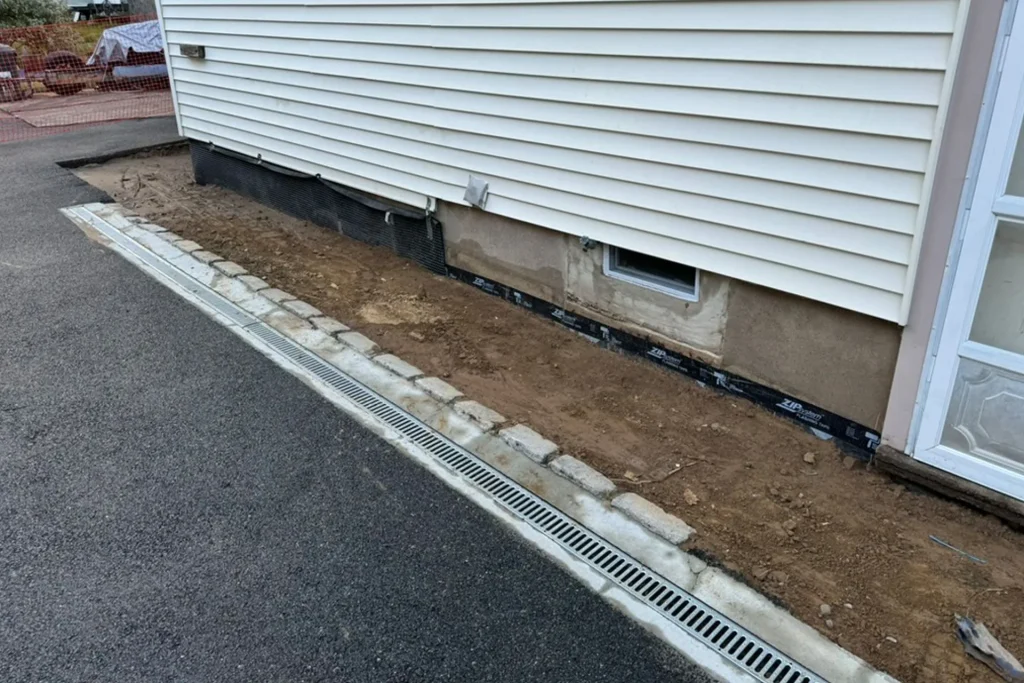
When water is entering through the https://www.google.com/maps?cid=15618896523686751270 foundation or rising beneath the slab, a reliable system often includes interior drainage channels, a sump pit, and a discharge line that moves water away from the house. If the issue stems from poor grading or overloaded gutters, exterior corrections may sharply reduce how much water reaches the foundation in the first place. In more severe cases, exterior waterproofing with excavation, crack repair, and membrane installation is the right call, though it is more disruptive and more expensive.
That is where professional judgment matters. Not every home needs the most invasive fix. Not every leak can be solved from inside. The best results come from matching the system to the house, the lot, and the failure pattern.
The weak point most people discover too late
A standard sump pump works well under normal conditions. That is exactly why many homeowners trust it without much thought. The problem appears during the worst storms, which are also the times when utility outages are most likely. Heavy rain and power loss often arrive together. If water is flowing into the pit and the primary pump has no electricity, the basin fills, overflows, and the basement floods anyway.
I have seen basements with very good interior drainage systems fail for this reason alone. The drain tile did its job. Water reached the pit exactly as designed. The pump sat silent because the neighborhood lost power for six hours.
That is why battery backup systems matter. They are not bells and whistles. They are a form of redundancy for the one mechanical component your waterproofing system depends on most.
How a battery backup system adds real protection
A battery backup sump setup usually includes a secondary pump, a battery, a charger, and a control unit that monitors system status. When power drops, the backup pump takes over. Some systems also activate if the primary pump fails mechanically, even if the house still has electricity. That second function is underrated. Primary pumps do not just stop because of outages. Floats stick, impellers jam, switches wear out, and old pumps simply die.
The practical value is straightforward. During a storm, the backup system buys time and often prevents a full flood. In a finished basement, that can mean the difference between a minor service call and tens of thousands of dollars in flooring, drywall, trim, furniture, and mold remediation. Even in an unfinished basement, floodwater can damage water heaters, boilers, furnaces, washers, dryers, electrical circuits, stored records, and irreplaceable keepsakes.
Battery runtimes vary widely. They depend on the battery size, the pump design, and how often the system has to cycle. A good contractor should explain that honestly. There is no universal promise because a backup pump running every thirty seconds in a severe storm will drain a battery much faster than one cycling every few minutes. That said, even a moderate runtime can carry a home through the most critical stretch of an outage or buy enough time for a generator to be connected.
Not all backup systems are created equal
There is a big gap between a cheap backup pump package and a properly specified system. Homeowners often compare by upfront price alone, but that misses the real performance factors.
Battery type is one example. Some systems use maintenance-free marine or deep-cycle batteries. Others rely on more basic options that may not hold up as well over repeated charge cycles. Monitoring features matter too. Audible alarms, remote alerts, and simple status lights can warn you that a battery is weak, disconnected, or nearing the end of its service life. Without some form of monitoring, the backup system may quietly degrade until the day it is needed.
Pump capacity matters as well. The backup unit does not always need to match the primary pump gallon for gallon, but it needs enough output to handle expected inflow rates for that property. In homes with heavy groundwater pressure, a very small backup pump may struggle during the exact events it was installed to address.
A few points are worth checking before any system goes in:
- Ask whether the backup pump activates during both power failure and primary pump failure.
- Confirm the expected runtime under light, moderate, and heavy pumping conditions.
- Find out how the system signals a low battery, charger fault, or pump problem.
- Verify where the discharge line exits and whether it has freeze protection and a check valve.
- Ask about battery replacement intervals and routine testing requirements.
That short conversation often reveals whether a proposal is thoughtful or generic.
The relationship between waterproofing and backup power
Homeowners sometimes ask whether a battery backup can replace broader waterproofing work. Usually, no. A backup pump is not a substitute for correcting the path water takes to the foundation. It is one layer in a larger defense plan.
Think of the basement as a system. Exterior grading, gutter performance, downspout extensions, crack repair, interior perimeter drainage, vapor control, sump capacity, and backup power all influence the result. If one layer is badly neglected, the rest have to work harder. A home with poor grading may flood more often because too much roof and surface water is directed toward the foundation. A powerful backup pump helps, but it is coping with water that should have been diverted before it reached the wall.
At the same time, a well-waterproofed basement still benefits from backup power. Even a properly designed drainage system intentionally channels water to the sump pit. During extreme weather, that water has to be pumped out. Good waterproofing lowers the burden. Backup protection keeps the burden from becoming a disaster when conditions stack up.
Interior systems versus exterior systems in NJ homes
This is one of the most common decision points in Basement Waterproofing NJ projects. The answer is rarely absolute.
Interior systems are often the pragmatic choice when water enters along the cove joint, through floor cracks, or from hydrostatic pressure beneath the slab. They are less disruptive than full excavation, generally more affordable, and very effective when designed and installed correctly. They also pair naturally with sump pumps and battery backups because the whole system is built around collecting and removing water.
Exterior systems become more compelling when foundation walls are badly cracked, when water pushes through specific wall sections, or when there is an opportunity to solve multiple issues at once during a larger project. On some older homes, especially those with chronic wall seepage, exterior repair and membrane work can dramatically reduce water contact at the source. The trade-off is cost, landscape disruption, and in tight lot lines, practical difficulty.
In New Jersey’s older housing stock, I often see hybrid solutions make the most sense. The contractor may improve grading and downspout discharge outside, seal targeted wall penetrations, and install an interior drainage channel with a sump and battery backup inside. That approach respects both the cause and the reality of the structure.
A finished basement changes the stakes
When a basement contains little more than mechanical equipment and seasonal storage, some homeowners accept a higher level of risk than they should. Once that basement is finished, the risk profile changes immediately. Carpet, engineered flooring, drywall, insulation, baseboard trim, built-ins, gym equipment, electronics, and furniture all increase both the potential loss and the speed with which a small water event becomes a major repair.
Finished basements also hide warning signs. Water behind a finished wall may not show itself until there is staining, odor, warped trim, or mold growth. In those situations, drainage and backup systems are not just protective devices. They are insurance against concealed damage.
If a homeowner is planning a basement remodel, waterproofing and backup power should come before flooring samples and paint colors. It is painful to watch people spend heavily on finishes while treating moisture control as an optional add-on. One severe storm can erase those savings overnight.
What proper installation looks like
Good equipment can still fail in a poor installation. This is where workmanship separates durable systems from expensive disappointments.
The sump pit should be sized appropriately for the pump and expected inflow, not undersized to save labor. The liner should be stable. The lid should fit properly, especially if radon concerns exist. The discharge line should route water far enough from the house that it does not circle back to the foundation. In freezing conditions, discharge design matters a lot. I have seen systems rendered useless by frozen exterior lines because no one planned for winter operation.
Check valves are another small detail with large consequences. Without them, water in the vertical discharge line can drain back into the pit every time the pump stops, increasing cycle frequency and wear. Alarm placement matters too. If the warning is inaudible from the main living area, it may not help much during the night or while laundry machines are running.
Battery placement deserves care. It should remain accessible for testing and replacement, protected from accidental impact, and installed according to the manufacturer’s ventilation and safety recommendations. Sloppy wiring, loose connections, or improvised shelving around the battery are signs to pay attention to.
Maintenance is what keeps protection real
A waterproofing system is not a set-it-and-forget-it feature. It does not need constant attention, but it does need periodic checks. This is especially true for battery backup systems because batteries age whether or not the basement floods.
A simple maintenance rhythm goes a long way. Test the pump operation, inspect the pit for debris, confirm the charger status, and review alarms. During storm season, it is smart to listen for unusual cycling patterns. A pump that runs far more frequently than usual may be signaling a discharge blockage, a failing check valve, or changing site drainage.
Most backup batteries do not last forever. Depending on the type, usage, and temperature conditions, replacement intervals often fall within a multiyear range rather than a decade-long life. Homeowners should not guess. They should keep the installation date written down and ask the installer what replacement window is realistic for that model.
Here are the maintenance habits that consistently prevent surprises:
- Test both the primary and backup pumps at least a few times a year.
- Keep the sump pit free of loose debris, sediment, and items stored too close to the lid.
- Check the battery age and charger status before storm-heavy seasons.
- Inspect the discharge point outdoors for blockage, icing, or recirculation near the foundation.
- Respond quickly to alarms instead of silencing them and forgetting about them.
It is simple work, but it matters.
Cost questions homeowners in NJ usually ask
Price depends on the scope. A modest battery backup addition to an existing, healthy sump system costs far less than a full basement waterproofing project that includes drainage channels, pit work, and pump replacement. Exterior excavation and membrane work can cost significantly more than interior approaches because labor, access, and restoration are more involved.
The cheapest path is rarely the least expensive over time. If a contractor proposes a bargain backup setup but uses a small battery, limited monitoring, and a low-capacity secondary pump, the savings may disappear the first time a long outage hits. On the waterproofing side, cosmetic patching and paint-based fixes often create the illusion of progress without addressing pressure or flow. Homeowners then pay twice, once for the ineffective shortcut and again for the real repair.
A better way to evaluate cost is to compare it with the value at risk. Replacing one water-damaged furnace, remediating mold behind finished walls, or rebuilding a family room can quickly exceed the price of doing the system properly in the first place.
Choosing the right contractor for Basement Waterproofing NJ
The right contractor should be comfortable discussing the house as a whole, not just selling a pump or a coating. Good assessment starts outside. They should look at grading, gutter discharge, hardscape slope, nearby low spots, and the age and condition of the foundation. Inside, they should ask when water appears, where it first shows up, whether odors linger, how often the sump runs, and whether power outages are common in that neighborhood.
You want practical answers, not theatrics. If someone insists there is only one solution for every basement, that is a warning sign. So is anyone who minimizes the importance of backup power in an area with outage risk, or who cannot explain battery lifespan, pump capacity, or alarm functions in plain terms.
Experience with New Jersey homes matters because local conditions shape the best approach. A contractor who has worked on split-levels in Bergen County, colonials in Middlesex, shore-area properties with higher groundwater, and older South Jersey homes with masonry foundations has likely seen the patterns that a generic sales script misses.
The safer basement is the one built with redundancy
Waterproofing is at its best when it assumes things can go wrong. Storms can be worse than expected. Utility service can fail. A primary pump can quit at 2 a.m. A discharge line can freeze during a cold snap. Homeowners are better served by systems that acknowledge those realities than by systems designed only for mild weather and best-case conditions.
That is the real value of pairing Basement Waterproofing NJ with a battery backup sump system. The waterproofing side controls and redirects water. The backup side keeps protection alive when the primary line of defense loses power or breaks down. Together, they create resilience, which is what most homeowners are actually trying to buy.
A dry basement is not always the result of one dramatic fix. More often, it comes from sensible layers, careful installation, and routine maintenance. When those pieces come together, the basement stops feeling like the most vulnerable part of the house and starts becoming usable space again, even when the forecast turns ugly.
ARD Waterproofing
Address: 98 Smull Ave, West Caldwell, NJ 07006
Phone number: +12016465936
FAQ About Basement Waterproofing NJ
What is the best waterproofing method for a basement?
The best overall approach to waterproofing a basement is a combined exterior and interior system that stops water at the foundation wall and safely manages any moisture that gets through.
What is the average cost to waterproof a basement?
The average cost to waterproof a basement ranges from $2,500 to $15,000, with most homeowners paying around $5,200 for a complete project.
Can a basement be waterproofed from the inside?
Yes, a basement can be waterproofed from the inside, and it is often the most affordable and least disruptive method.